
Drawing from more than 600 Cases worldwide, the Contested Histories Initiative identifies three broad categories of remedies for addressing and resolving controversies over physical representations of historical legacies in public spaces: resignification, removal, and renaming.
In all cases, the Initiative advocates centring the voices of those marginalised by exclusionary historical narratives in the decision-making process to remedy a controversy. It should be stressed that we do not advocate for a specific remedy but rather for a clear, transparent, and inclusive process. Certainly, not every dispute can be resolved with the remedies we identified, but in many cases, one of them, or a combination of them, can help decision-makers and educators better understand the available options.
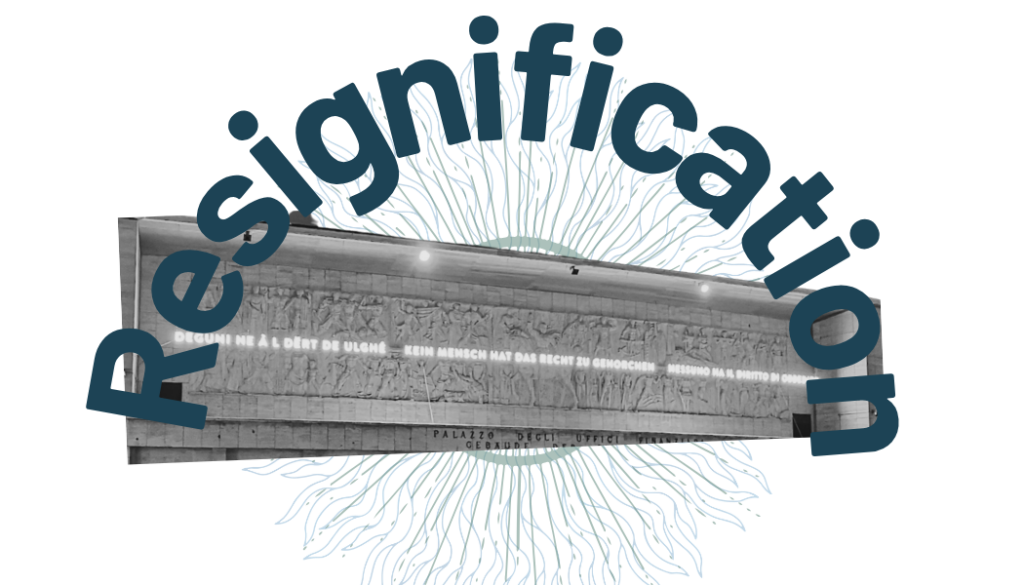
Resignification entails the transformation of the object’s signalling to the public. The least intrusive and fastest approach to resignification is to contextualise the historical legacy being represented, for example, via Contextualisation. Greater context works to balance and/or alter the meaning of certain historical narratives and/or clarify problematic iconography to provide a more nuanced lens through which to perceive the object and its legacy. Wording and language are crucial and should be sensitive to nuance. More complex, additive methods include Artistic Intervention and the installation of Counter Monuments, both of which are considered effective remedies to resignify and confront public silence. Resignification, whether it be via placarding, artistic intervention or counter monuments, requires a deliberative process, without which further controversy can result.
Contextualisation
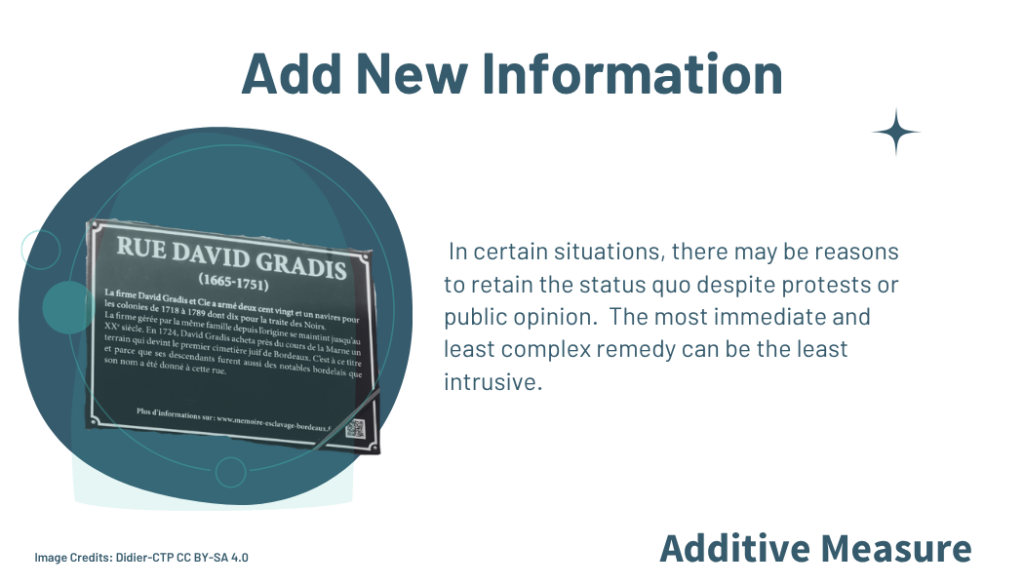
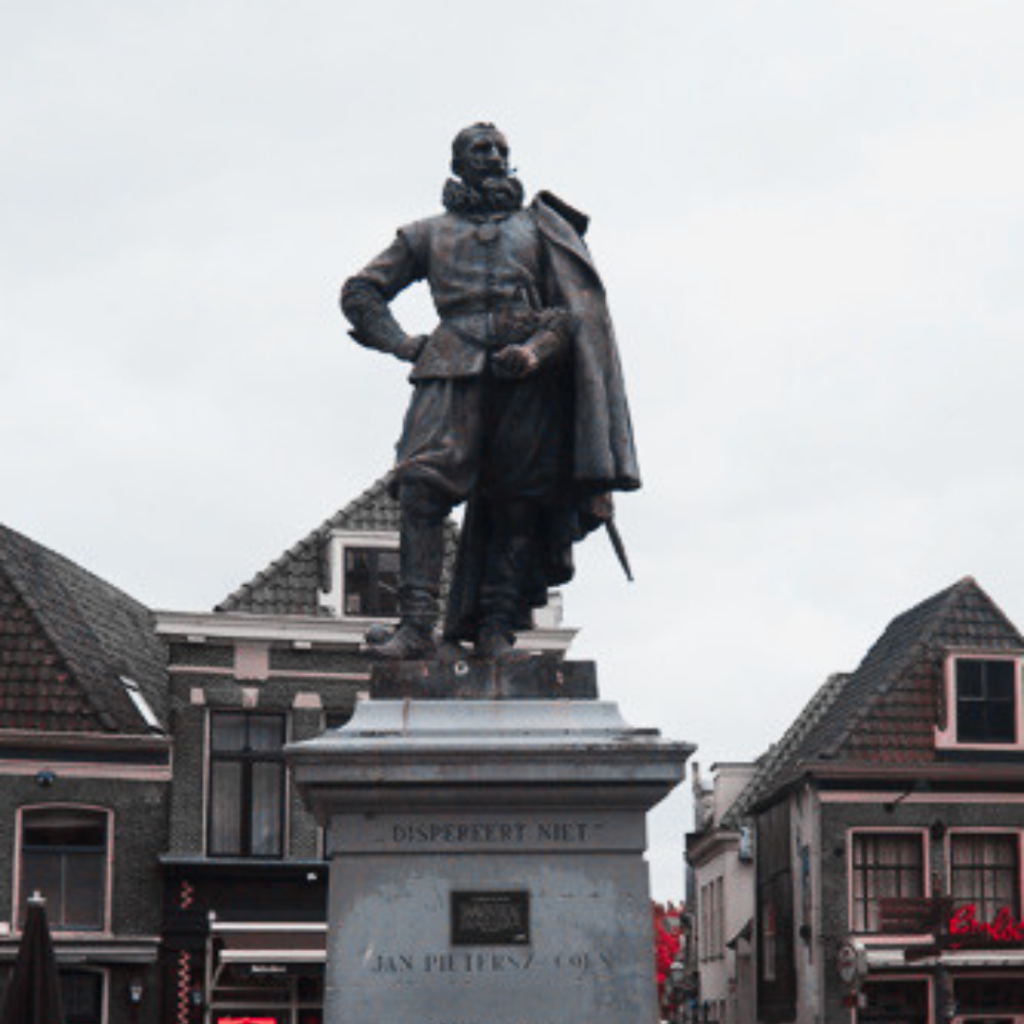
Image by Eintacht4ever via Wikimedia Commons CC Public Domain
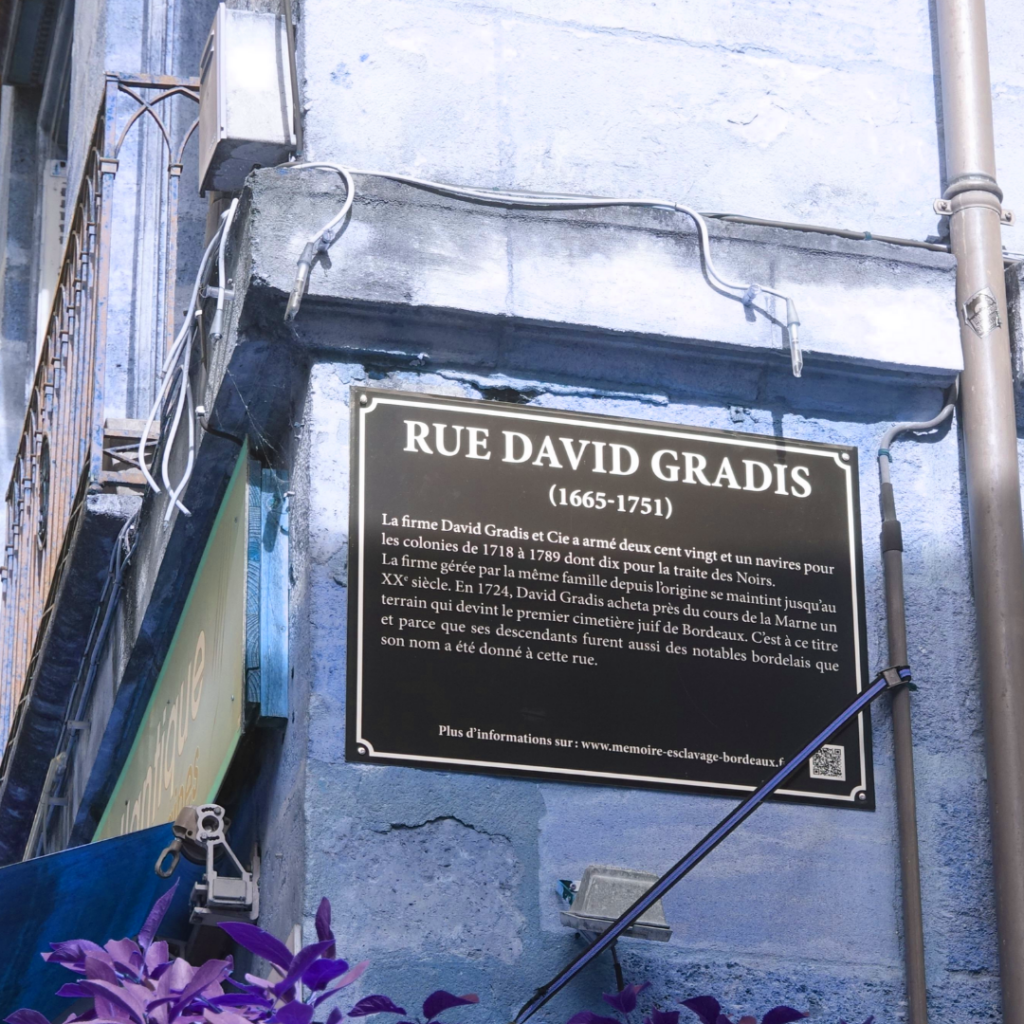
Image by Eintacht4ever Public Domain
Artistic Intervention
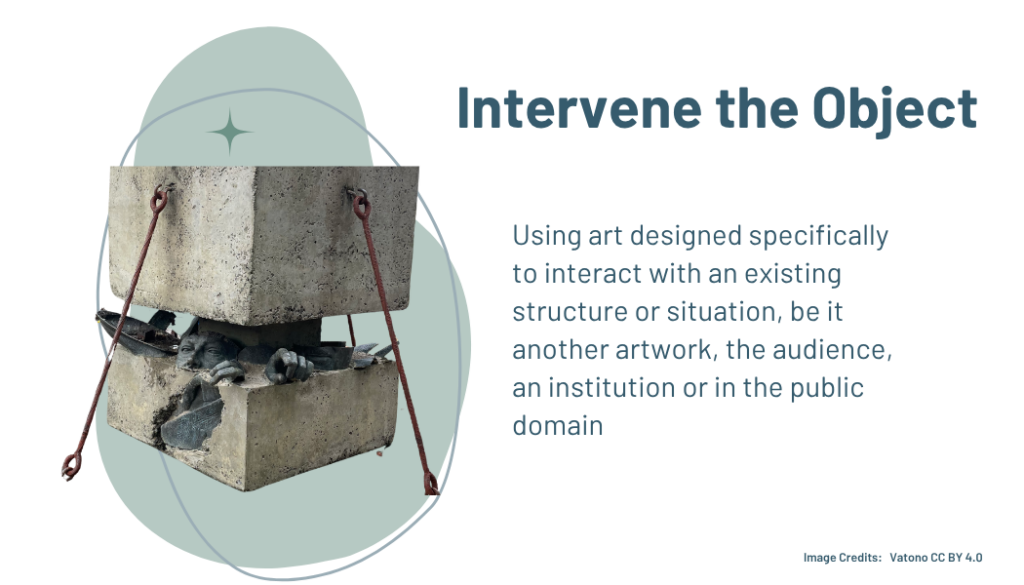
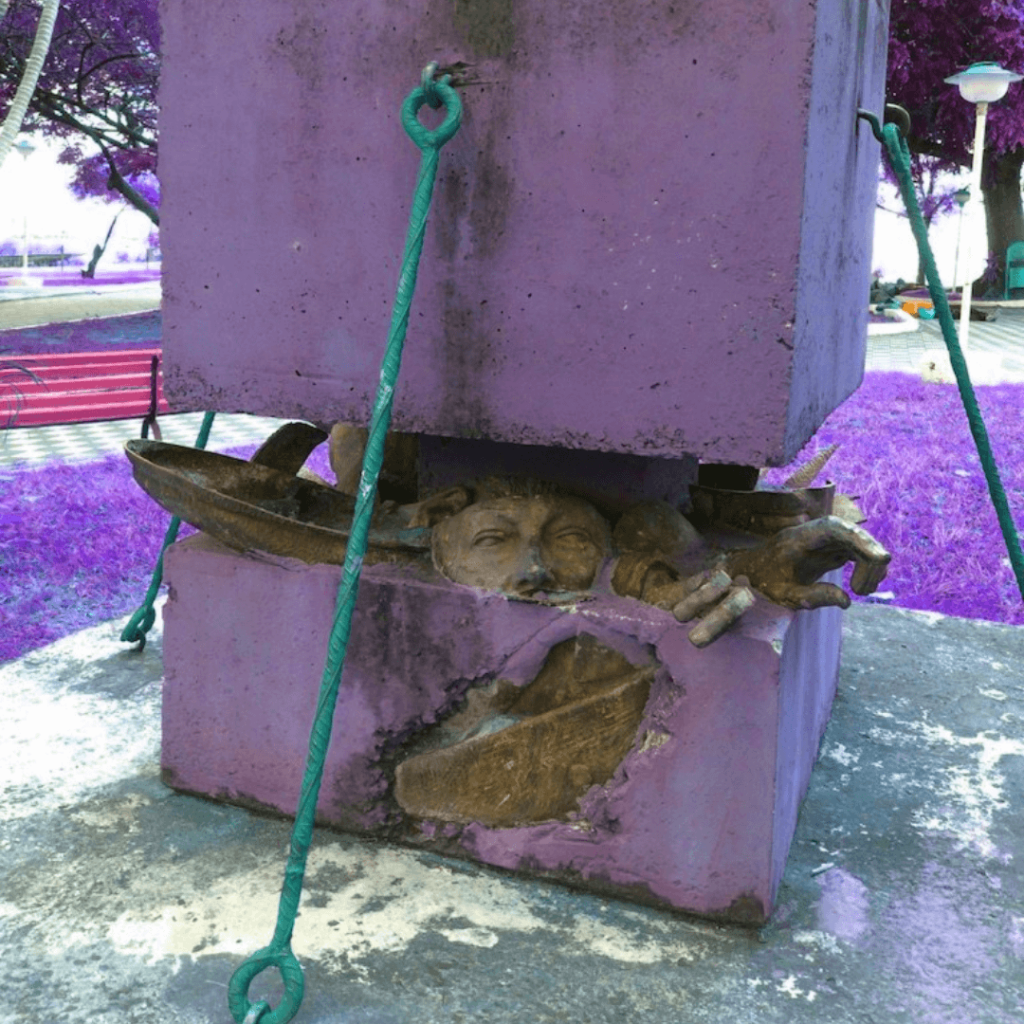
Image by Wyre Davies via Twitter
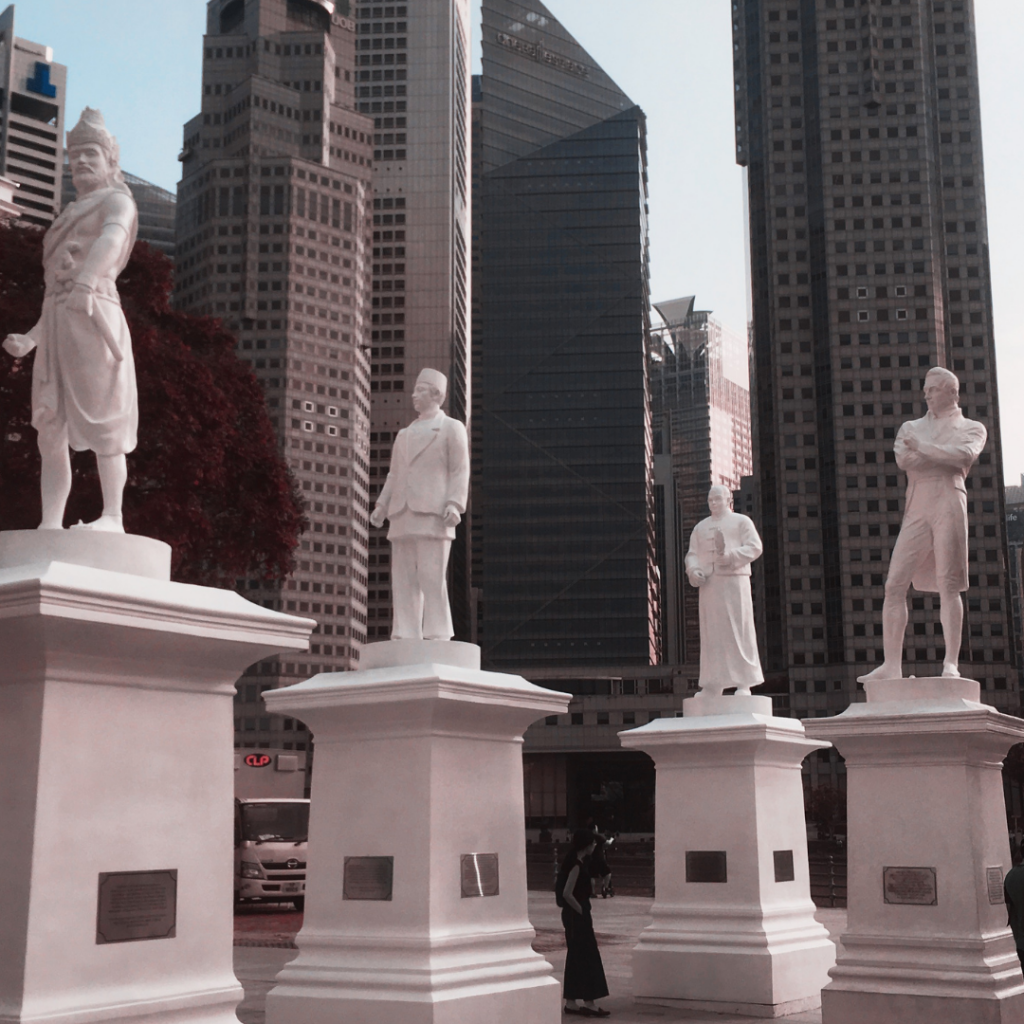
Image by Altopian1 CC BY-SA 4.0
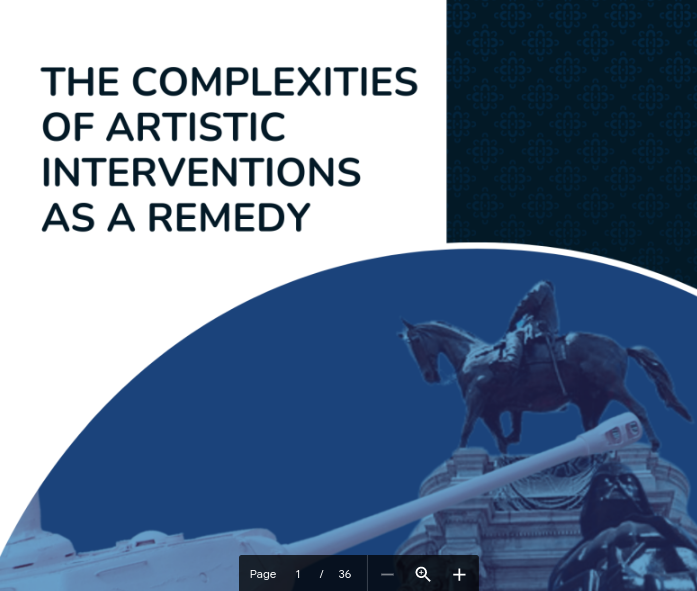
The Complexities of Artistic Intervention as a Remedy
Starting with an introduction to the topic and a theoretical background, this paper identifies and compares different methods within artistic interventions. From the Lenin statue in Ukraine turned into Darth Vader to the cloaking of Columbus in the US or the painting of monuments in the Czech Republic and Bulgaria, it considers why certain monuments are contested and how this contestation has been addressed through art.
Counter Monument
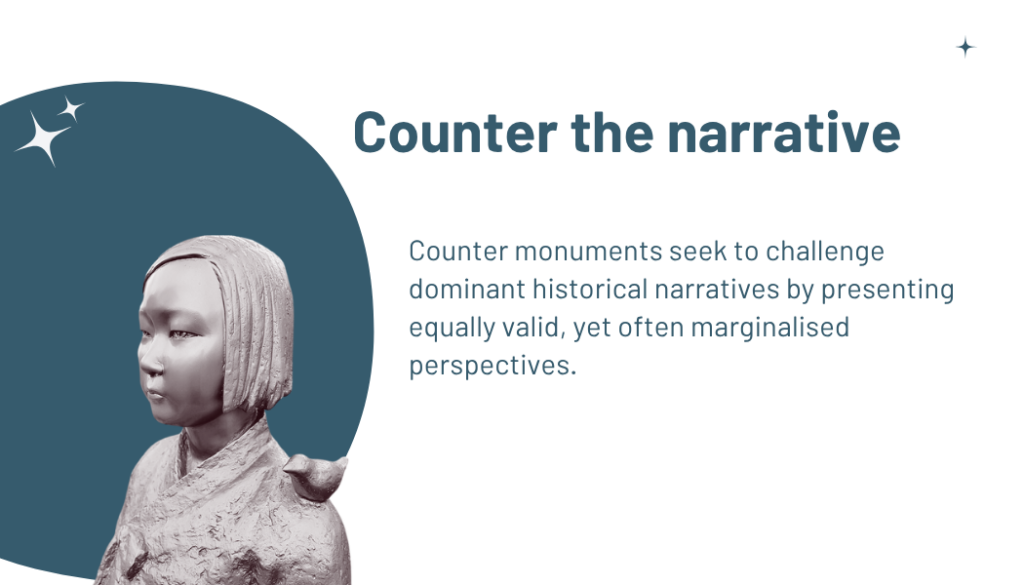
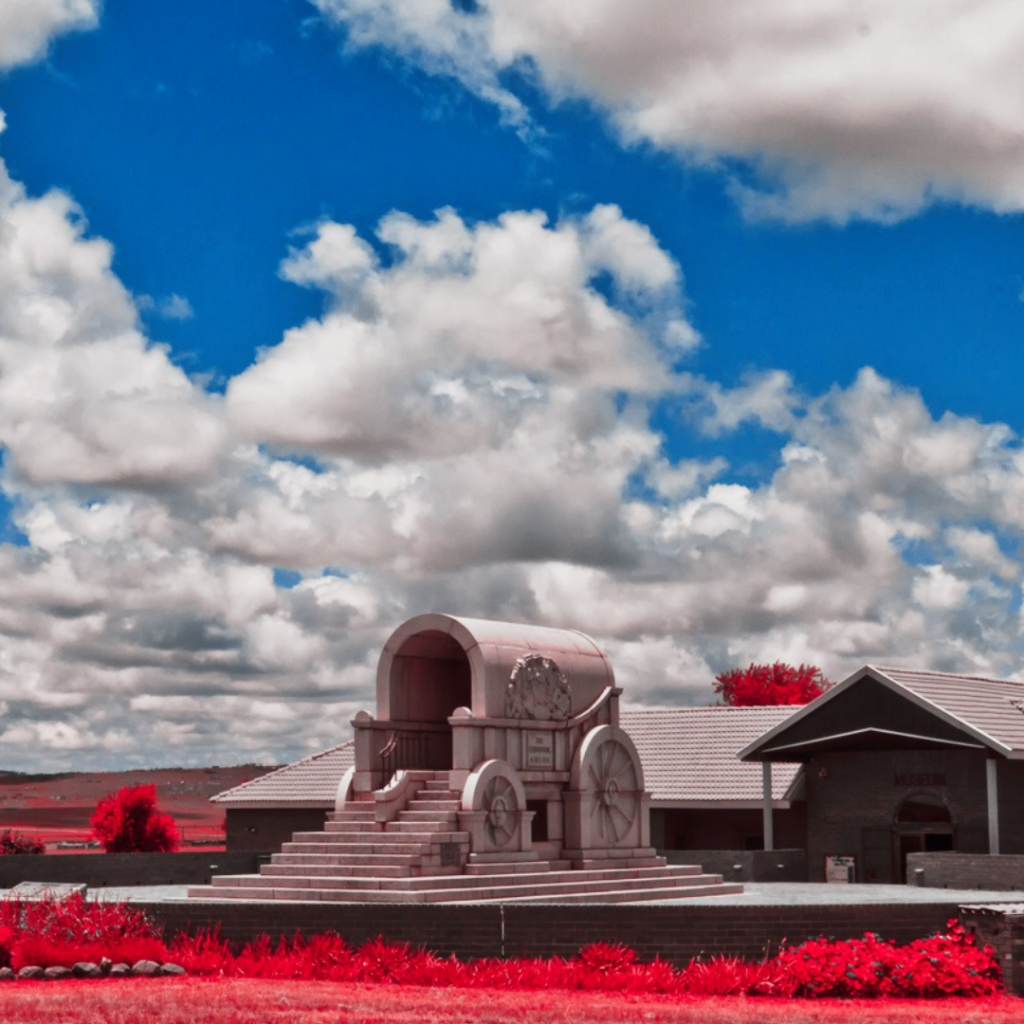
Image by Government ZA CC BY-ND 2.0
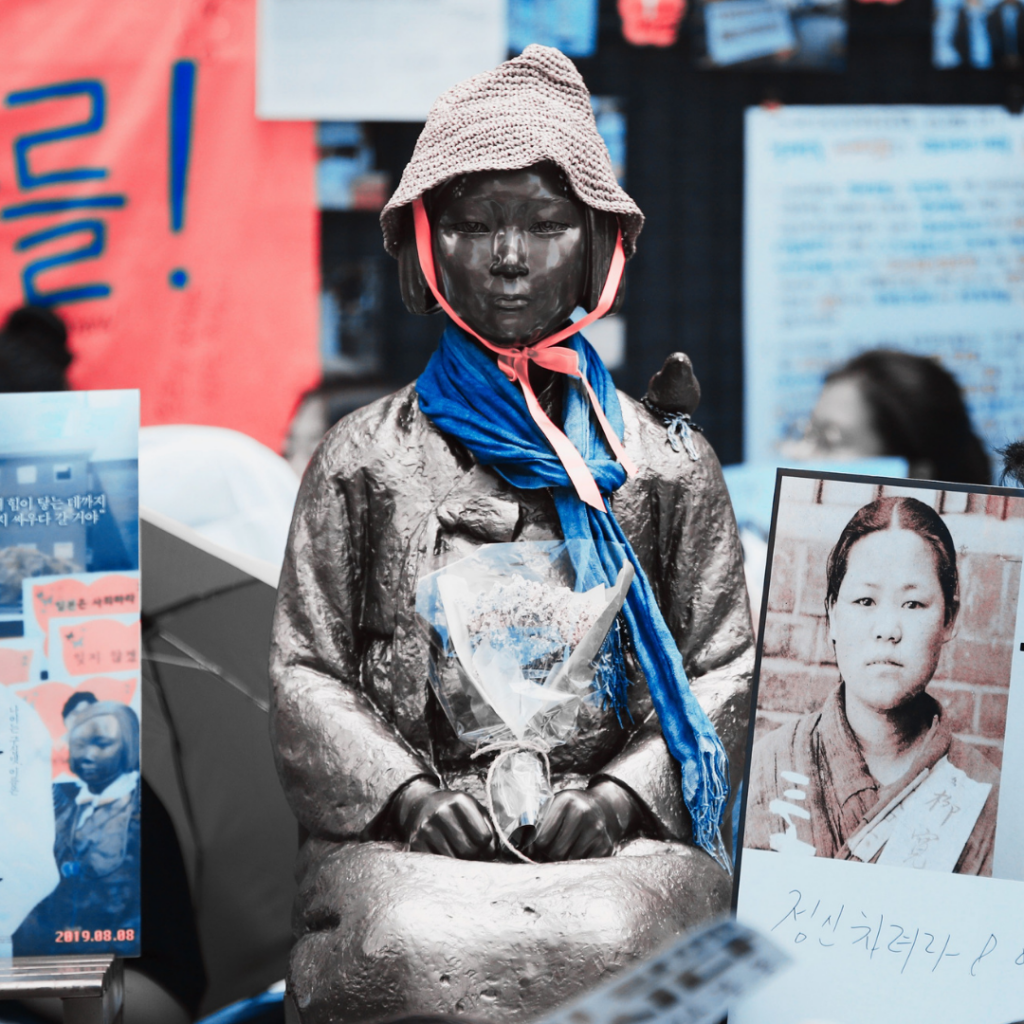
Image by Republic of Korea via Flickr CC BY-NC-SA 2.0
Repurpose
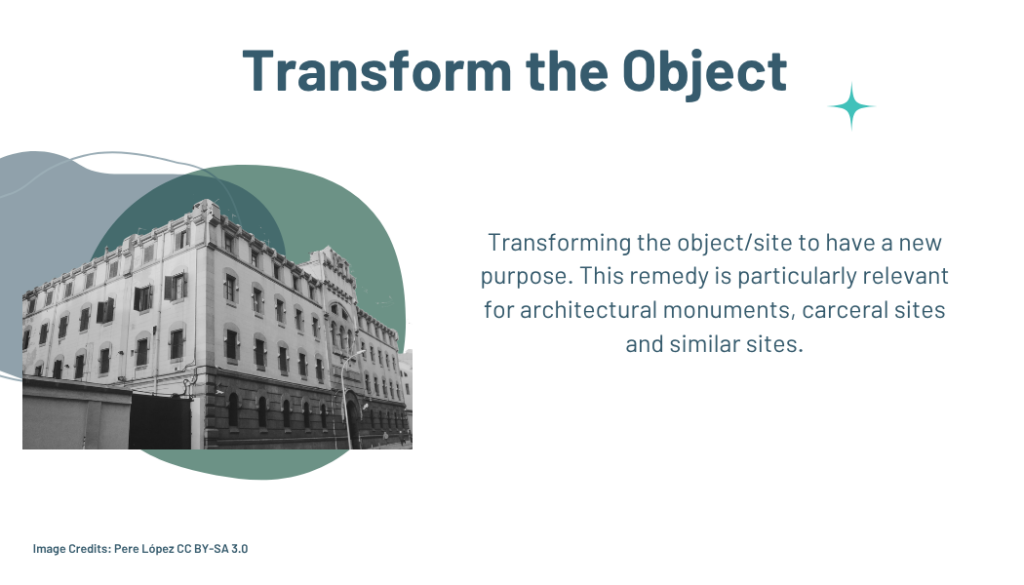
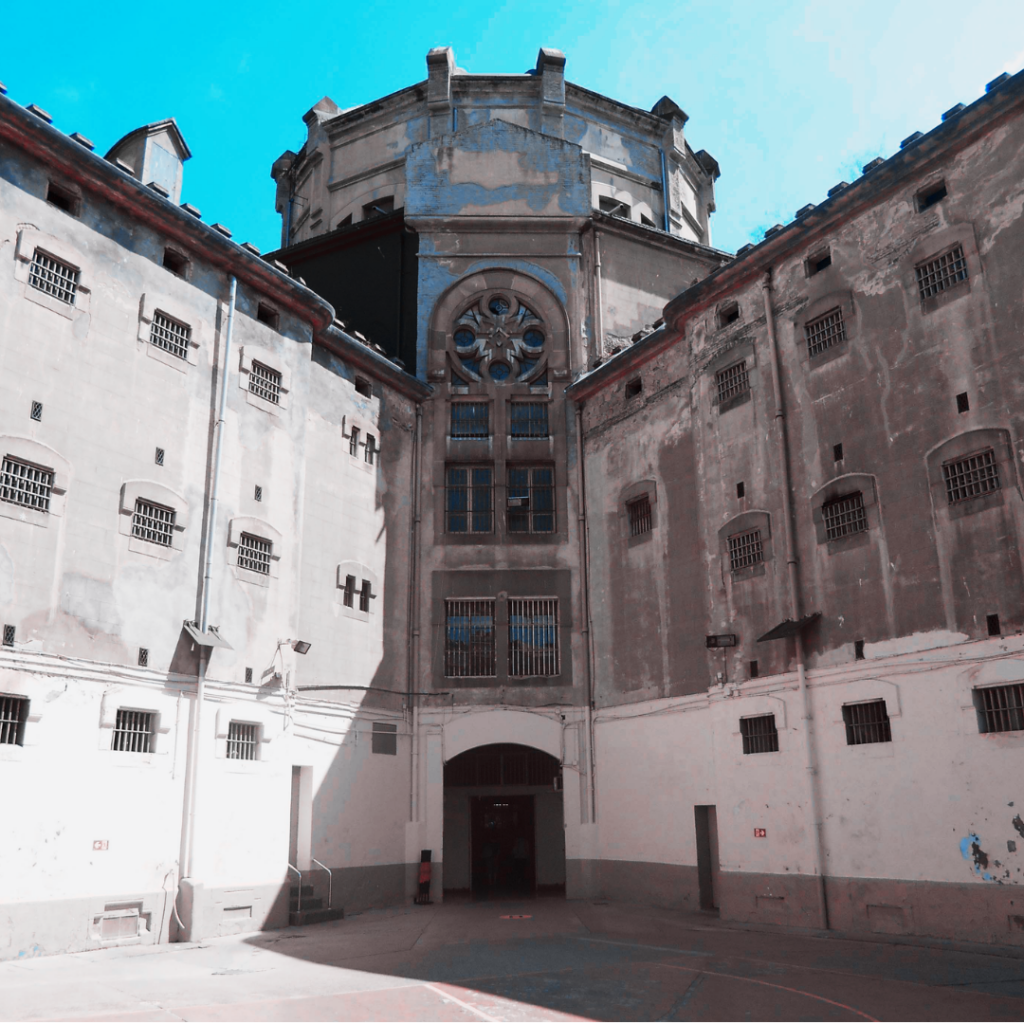
Image by Canaan CC BY-SA 4.0

Image by Danagrad via Wikimedia Commons CC BY 2.5
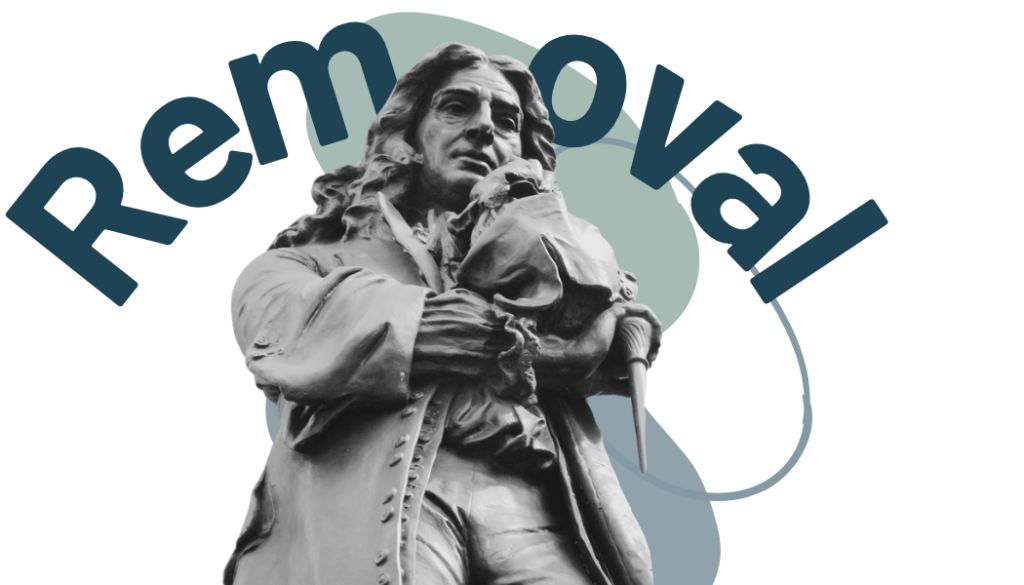
Removing a disputed object from public view, temporarily or permanently, may act as a remedy to de-escalate the potential for conflict. Temporary removal will allow time for reflection on and in-depth consideration of an object’s historical importance and appropriate text steps. For example, Relocation to a less prominent location, museum or statue park may be considered rather than permanently removing an object. Relocation may aid the resignification of an object and narrative. In light of evolving social values, permanent removal may be necessitated by problematic iconography and the reappraisal of historical figures or events within the contemporary memory landscape. Objects that are permanently removed may be kept in storage. Erasure of a historical object, for example, via the destruction of an object or inscriptions, is considered a last resort when no other option is feasible. This remedy is often employed during times of dramatic social or political change.
Relocation
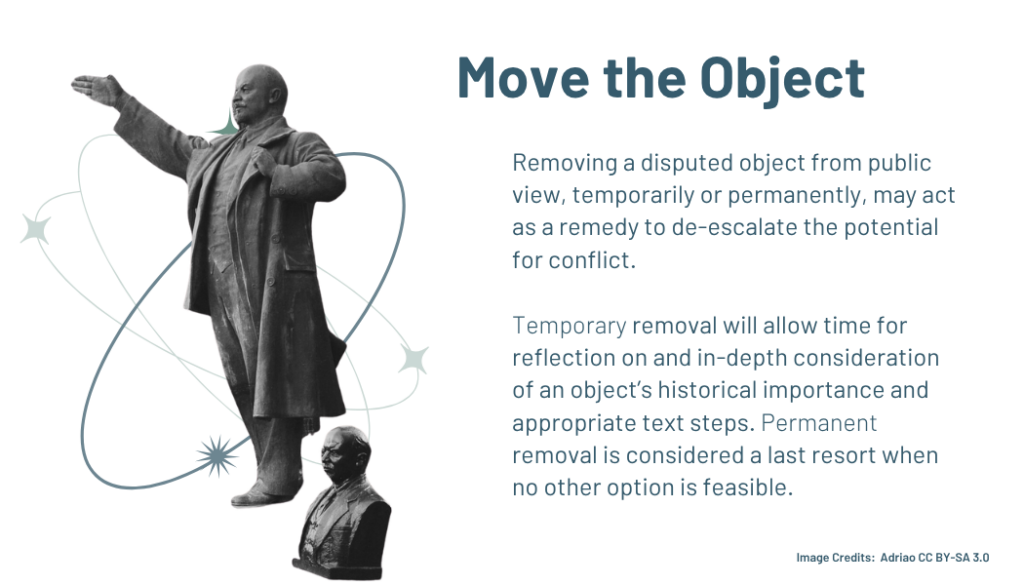
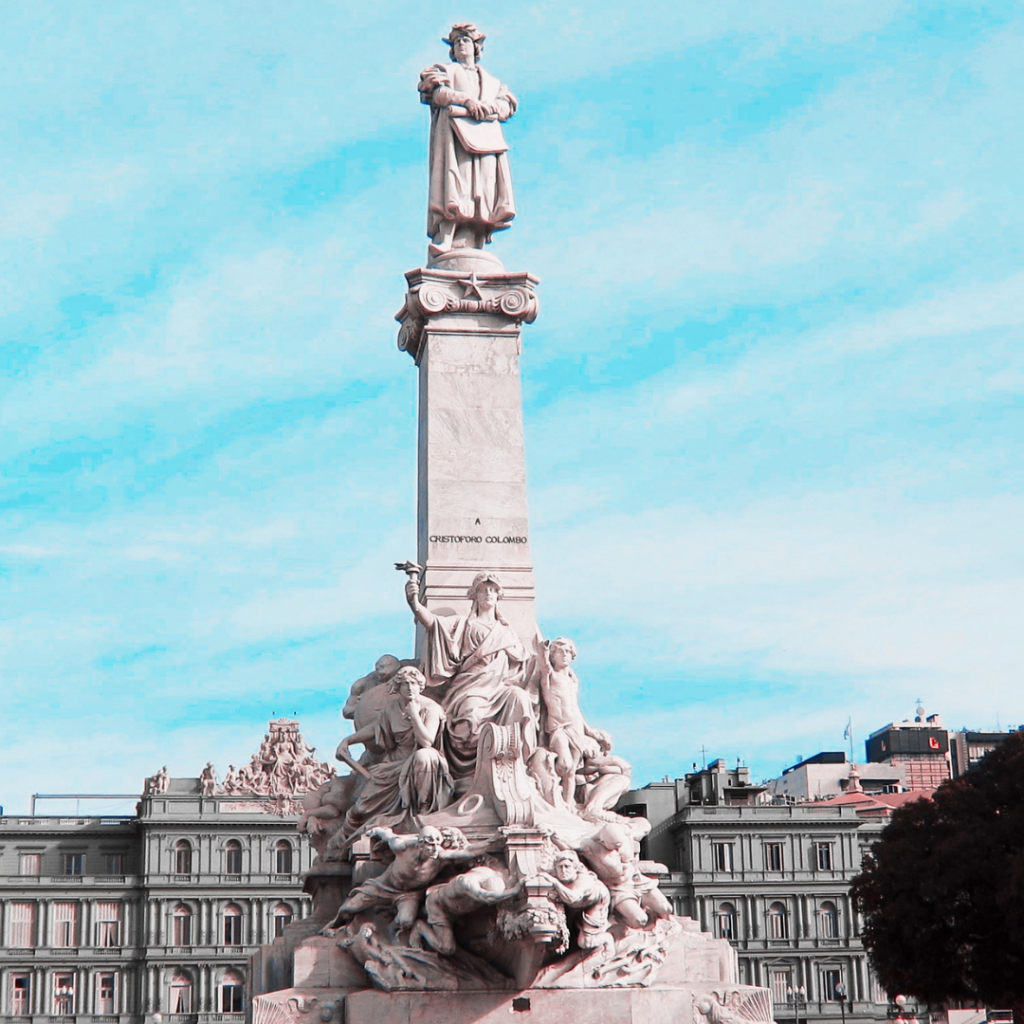
Image by Wally Gobetz CC BY-NC-ND 2.0
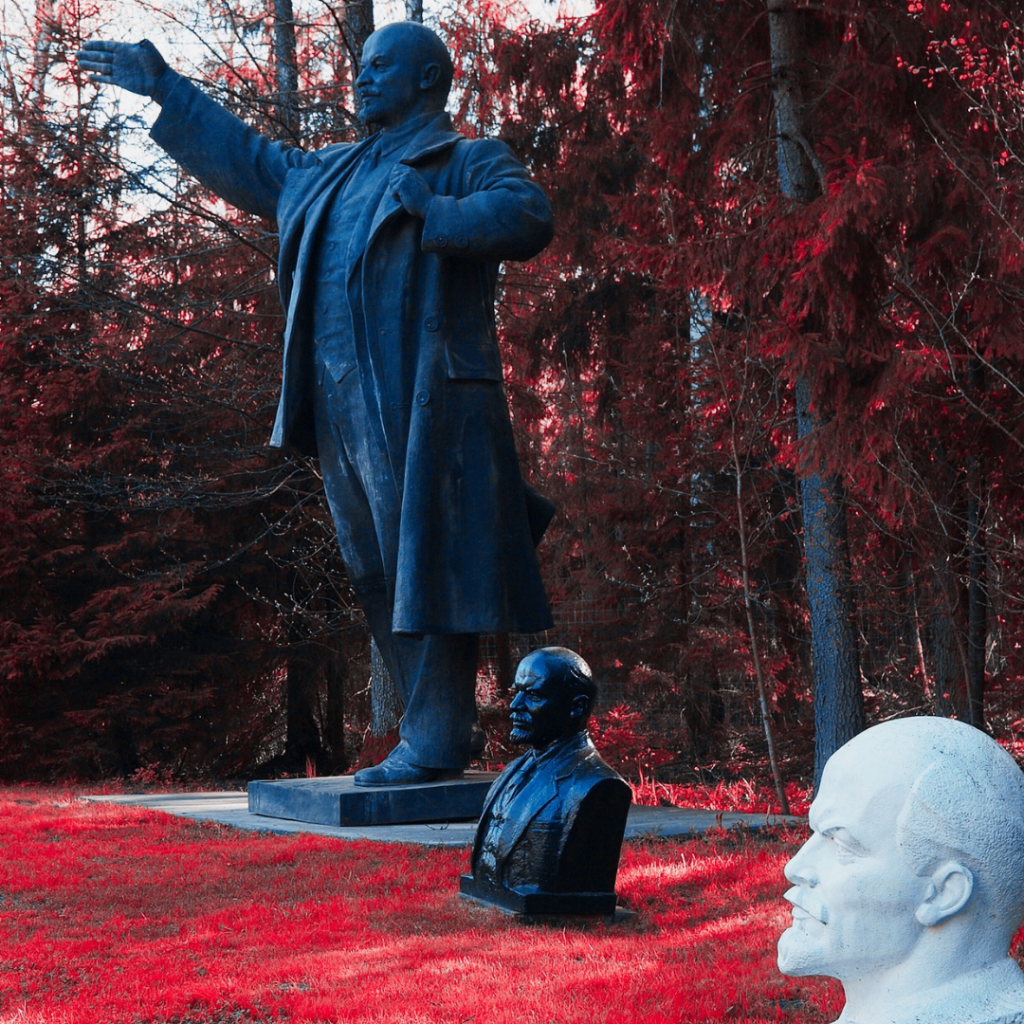
Image by Adriao CC BY-SA 3.0
Erasure
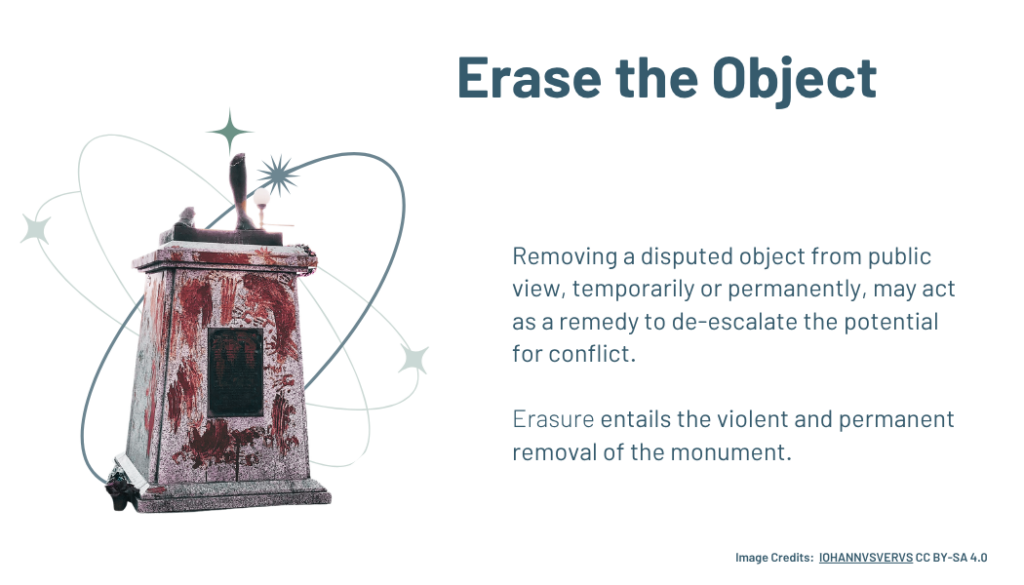
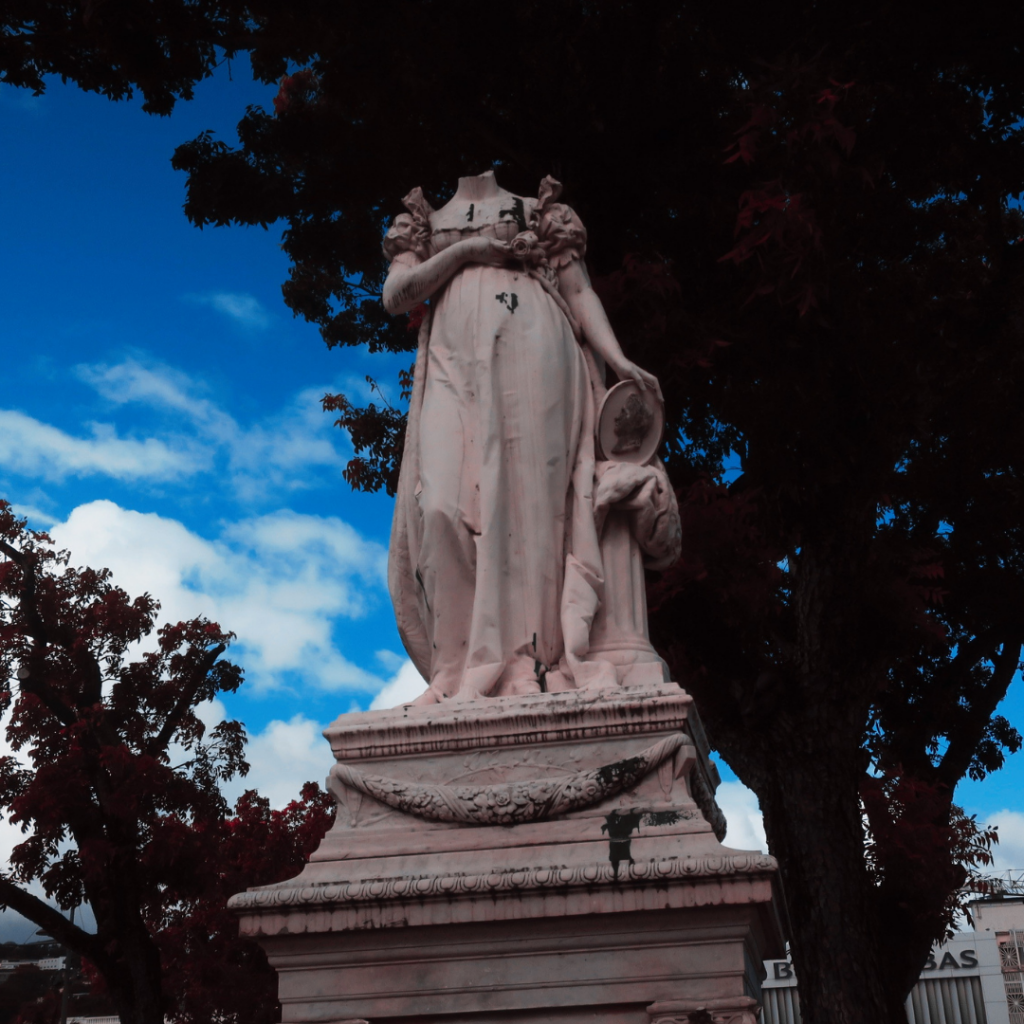
Image by Terrazzo CC BY-2.0
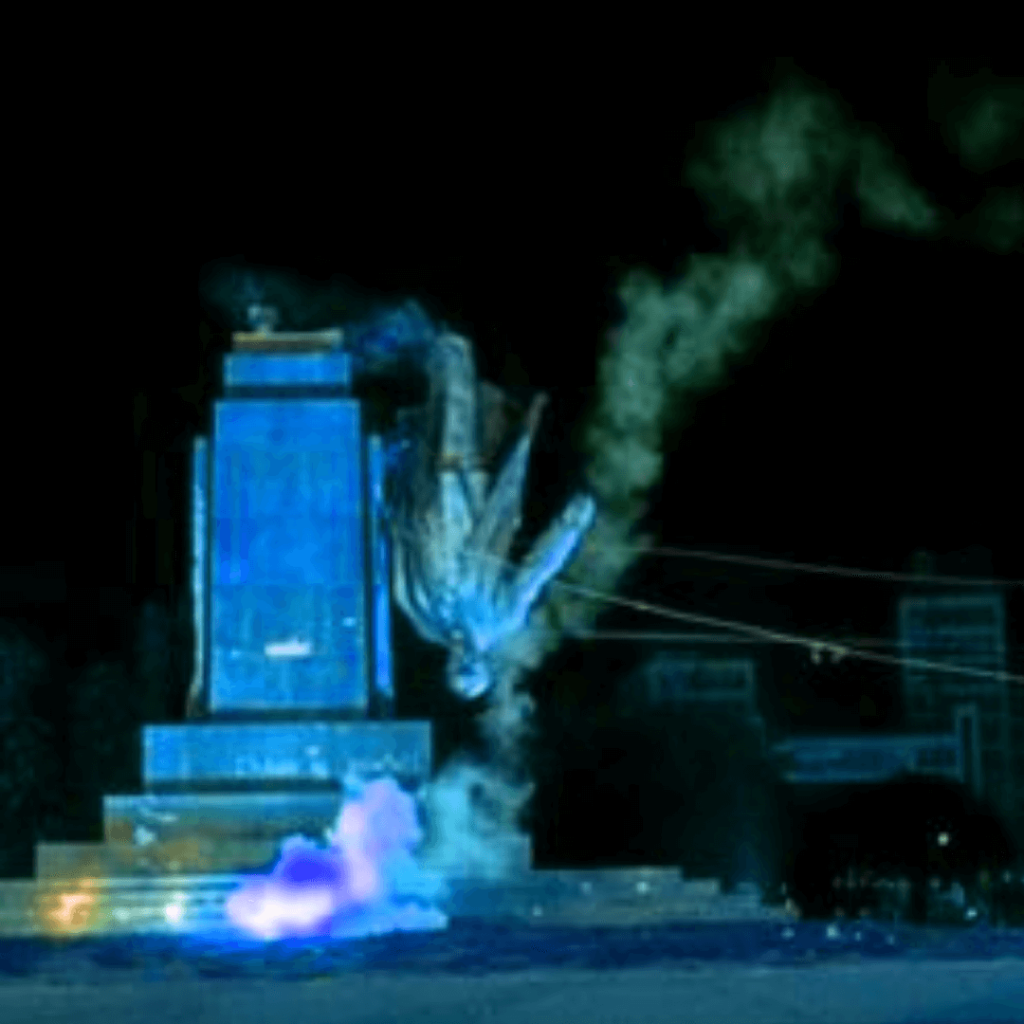
Image by Kpamua CC BY-SA 4.0

Naming or renaming streets, buildings and other public spaces, such as squares and metro stations, can rebalance historical narratives and recognise marginalised or underrepresented figures or events. Changes to names provide the opportunity for acknowledgement, contextualisation and community engagement. However, care must be taken since renaming can also be the source of contestation.
Renaming
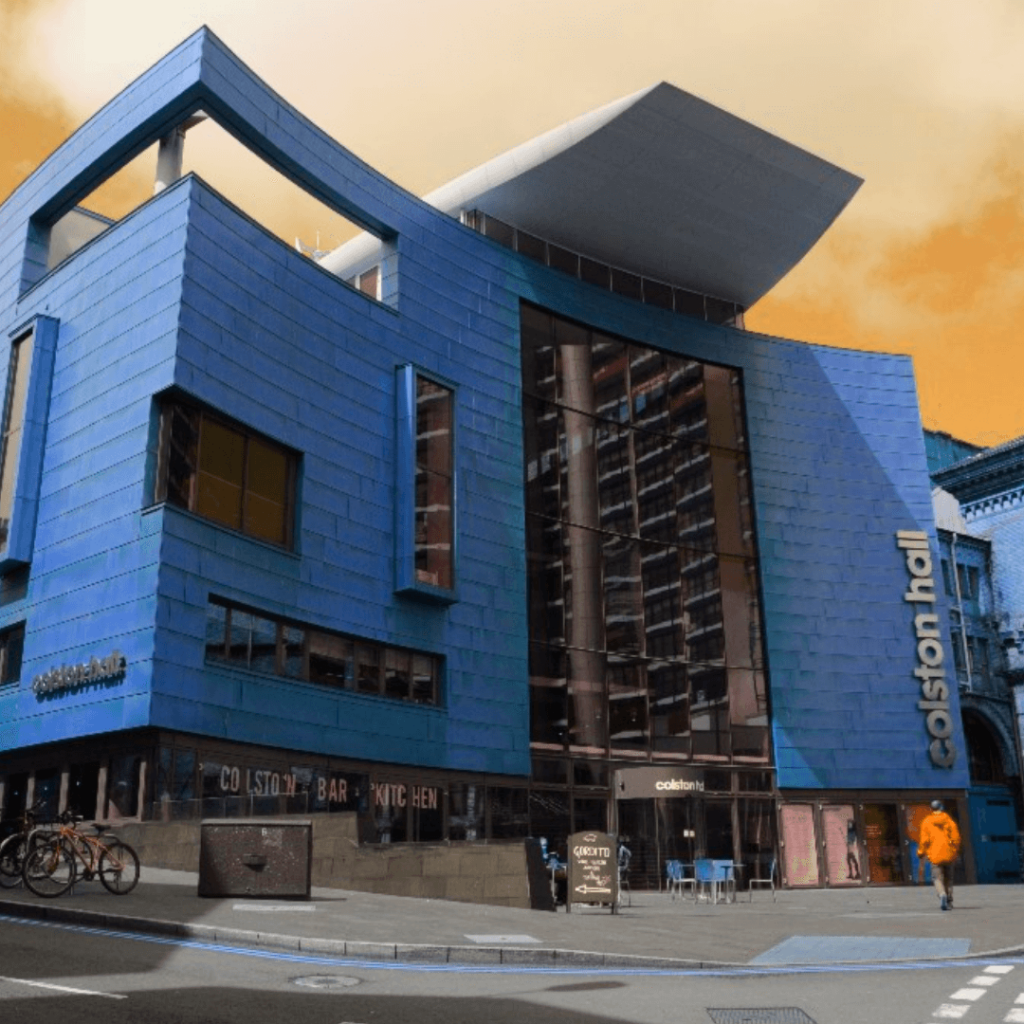
Image by Philip Halling CC BY-SA 2.0
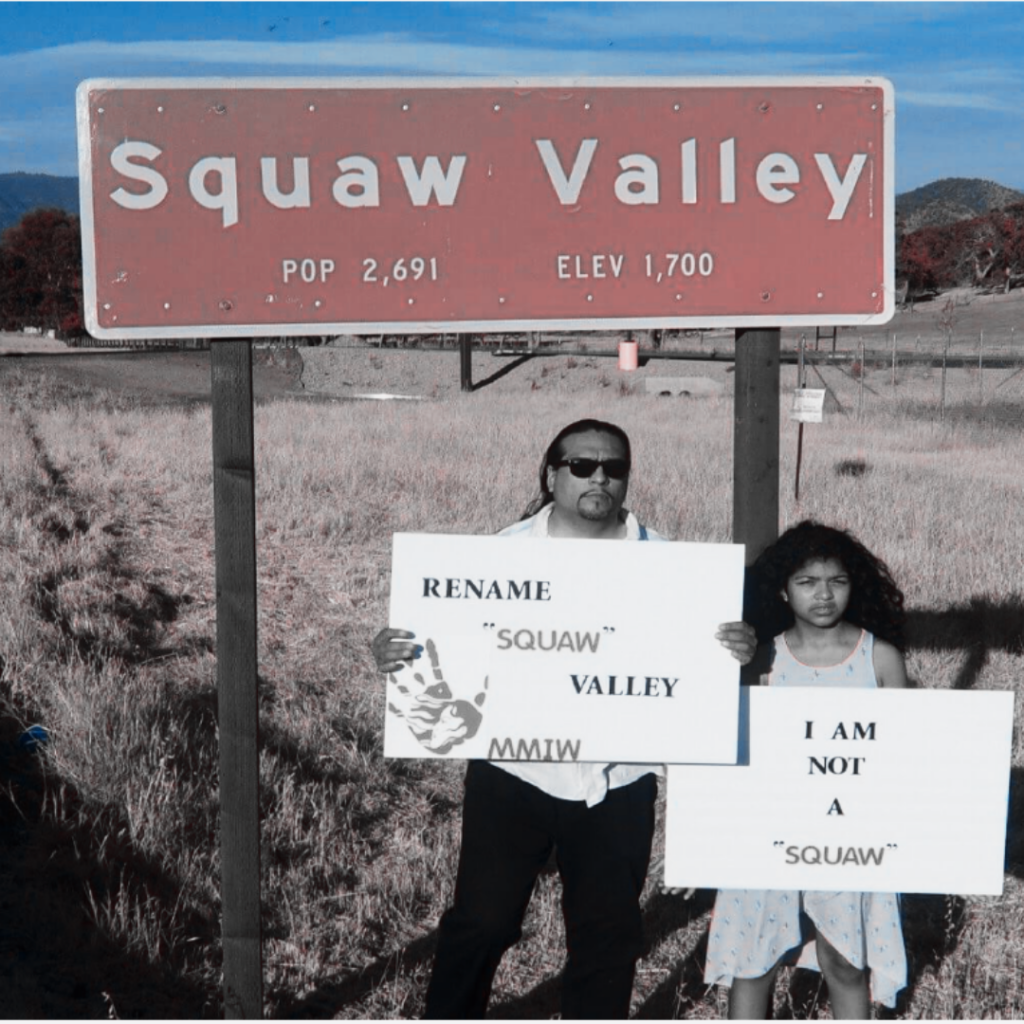
Image by Xavier Rain Tree, courtesy of Roman Rain Tree

Status Quo means the non-intervention (tangible heritage remains in its existing state and location) or intervention to return to status quo (tangible heritage has been returned or reconstructed after relocation or erasure).
Status Quo
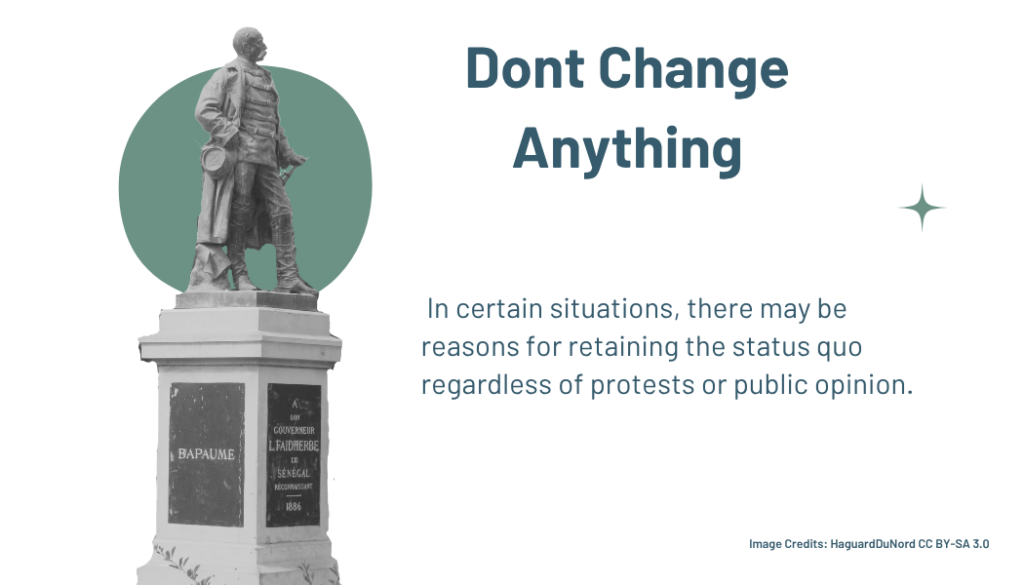
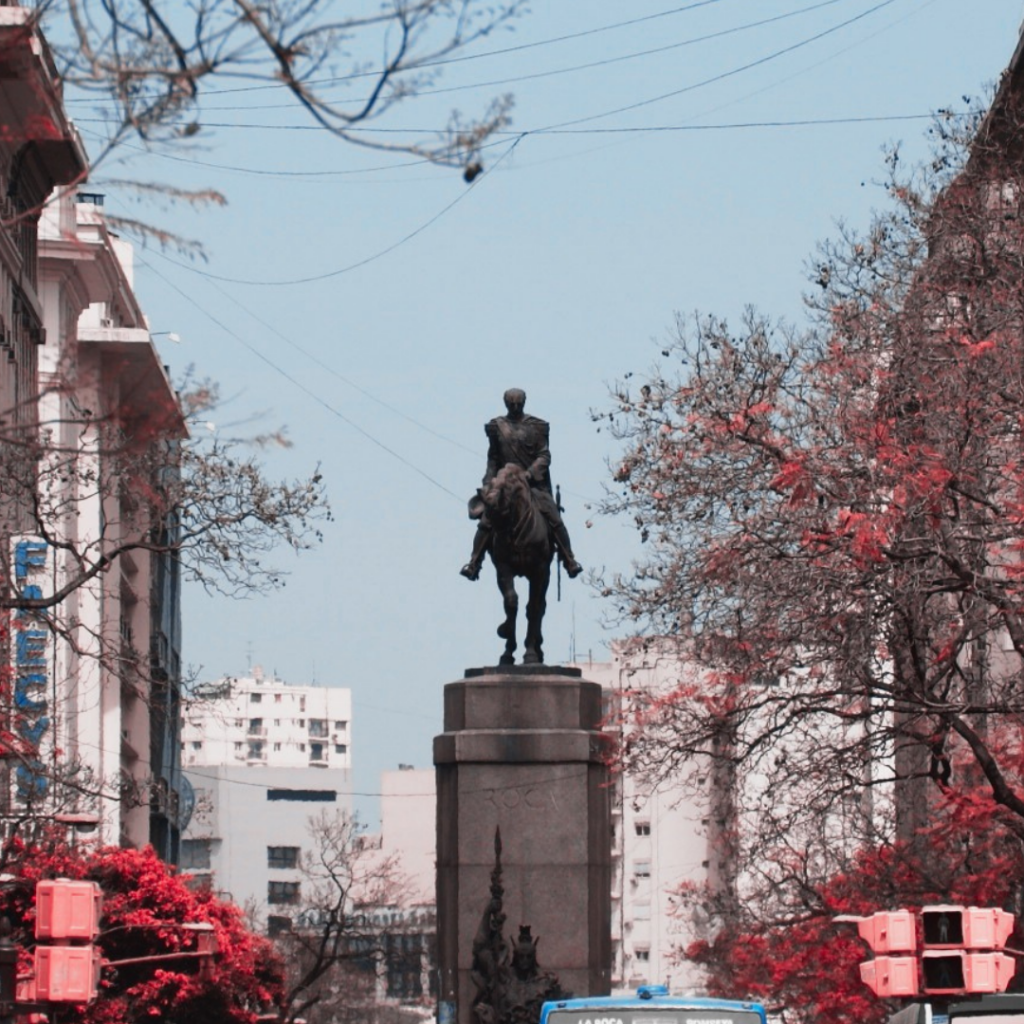
Image by Hermann Luyken CC0 1.0
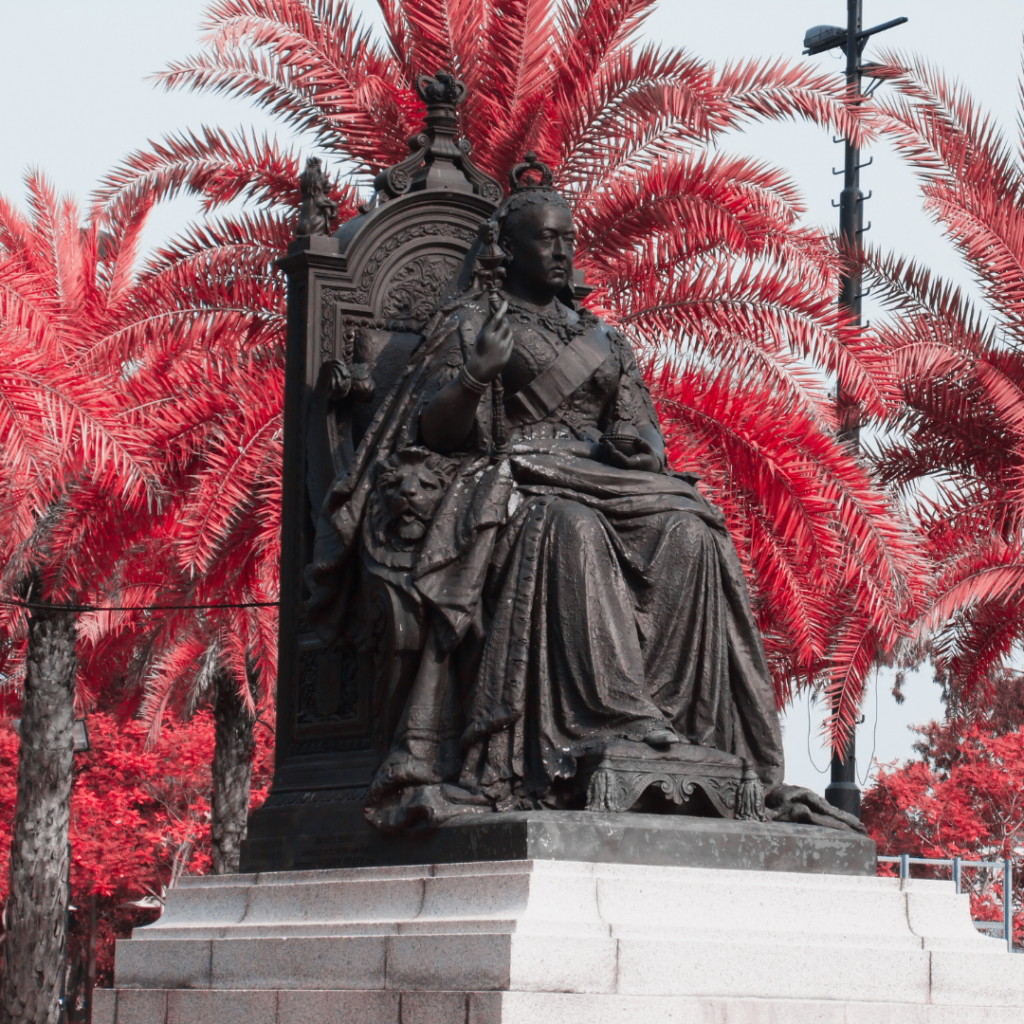
Image by Minghong CC BY-SA 4.0